
Google AI Overviews: What Local Businesses Need to Know
You’ve poured years of effort, budget, and late-night stress into getting your local business ranking on Google. You finally hit page one. Maybe you even secured that coveted position-one slot for your most valuable service. And now there’s a new box sitting above your result — a block of AI-generated text that answers the user’s question before they’ve even seen your link.
Welcome to the era of Google AI Overviews. If you have invested heavily in traditional digital marketing, this shift is quietly changing the rules of the game. It is completely normal to feel a bit behind on “the AI thing” or frustrated that the goalposts have moved just as you were winning.
This isn’t a reason to panic, but it is a wake-up call. The reality is that classic ranking tactics are no longer enough on their own. To keep your phone ringing, you need to understand how this new landscape operates, why old strategies are falling short, and exactly what it takes to get your business cited and credited in the new world of Google AI search.
What Are Google AI Overviews?
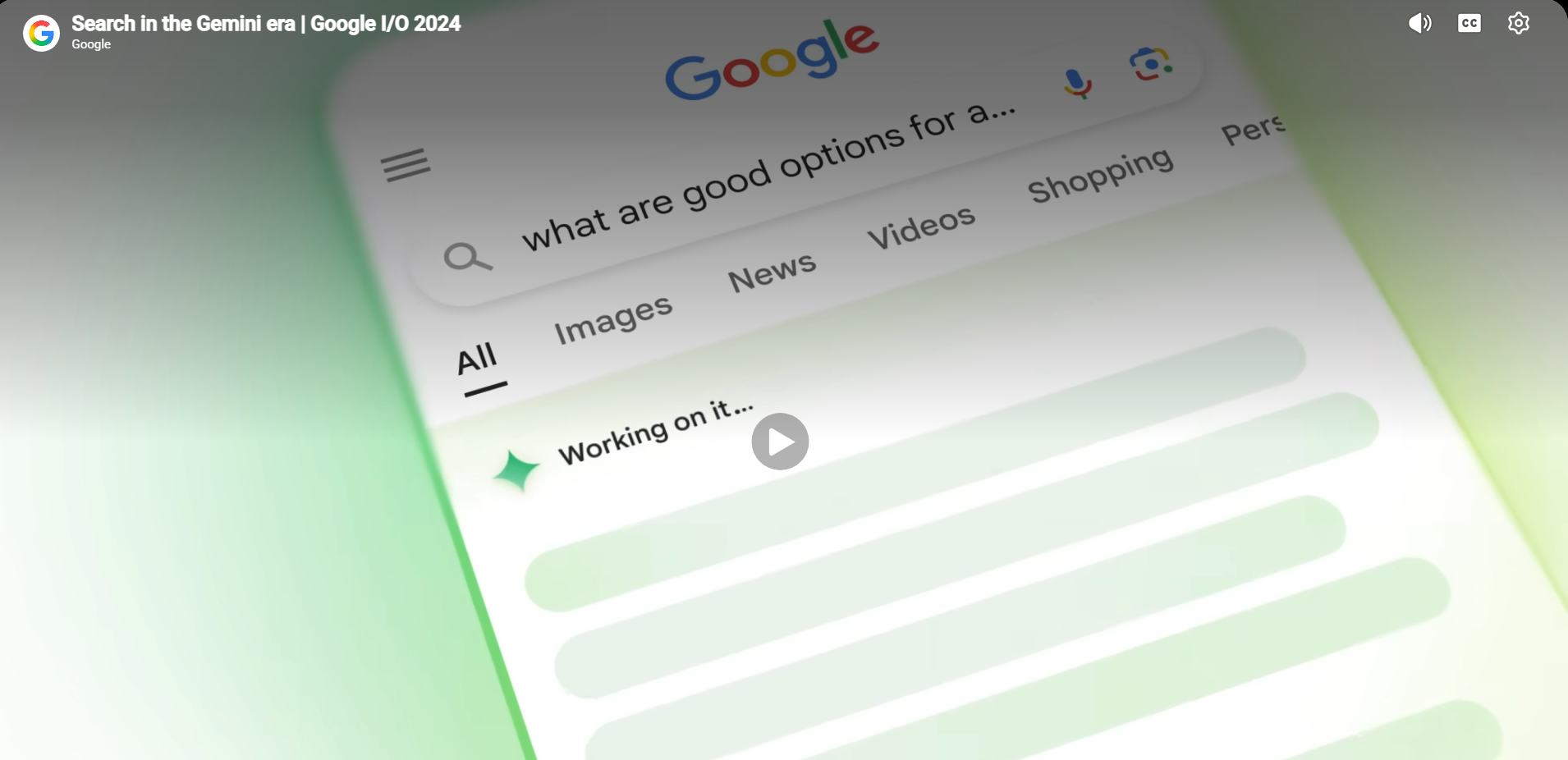
Google AI Overviews are automated, synthesised summaries that appear at the very top of search engine results pages (SERPs). Originally introduced as a beta experiment known as the Search Generative Experience (SGE), this feature has rolled out globally as a permanent fixture of modern search.
Instead of forcing a user to click through three different websites to piece together an answer, a Google generative AI overview uses advanced language models to scan the web, pull facts from multiple sources simultaneously, and present a cohesive answer directly on the screen. The cited sources get a brief attribution — a small card with a link. Everything else on the page moves further down.
Why Ranking Well Isn’t Enough Anymore
For the past decade, the digital marketing playbook was simple: rank first, capture the click, and convert the visitor on your landing page. Today, holding the top organic position is no longer a guarantee of web traffic.
When an AI summary answers a prospect’s query instantly, it triggers a phenomenon known as a zero-click search. The user gets the exact answer they needed without ever leaving Google’s ecosystem. They don’t scroll down, they don’t see your blue link, and your hard-earned organic position yields visibility without actual site traffic. Studies show that AI layouts can easily capture the majority of initial screen space on mobile devices, pushing traditional organic results completely below the fold.
This creates a brand-new step in the customer acquisition funnel. You can no longer rely solely on passive ranking; you must achieve direct citation within the AI summary itself to remain relevant to the user.
Earning Your Spot in Google’s Summaries
The honest answer is that Google hasn’t published a complete rulebook. While the underlying algorithm can feel like a black box, clear patterns reveal how to get cited in Google AI Overviews consistently. Google selects its source citations based on clear data presentation and structural authority.
- Lead with Direct, High-Impact Answers
AI search models are designed to find direct answers efficiently. Content that buries the answer three paragraphs in — after a preamble and a history section — is harder for the model to extract. Your web pages should state the core answer clearly in the very first paragraph, then use the remainder of the text to flesh out the nuance and technical context.
- Format for Machine Readability
Headers, short paragraphs, bullet points for lists, and tables for comparisons all help AI systems parse and extract information. Content that reads as a wall of unbroken text is harder to summarise cleanly.
- Focus on Hard Facts Over Marketing Fluff
Generic marketing copy rarely receives citations. The language models actively seek out specific data points, step-by-step processes, and concrete facts. Instead of writing “we offer affordable electrical services,” write “our standard electrical safety inspection takes 90 minutes and covers switchboard testing, grounding checks, and outlet verification.”
- Build topical authority
A website that covers a topic comprehensively — not just one article, but a body of content that addresses the question from multiple angles — signals expertise to both Google’s traditional algorithm and its AI systems. One good blog post isn’t enough. A cluster of related, well-structured content is.
- Earn trust signals
AI Overviews tend to cite sources that Google already considers trustworthy — sites with strong backlink profiles, established domain authority, consistent publishing histories, and accurate structured data (schema markup). The fundamentals of good SEO still matter. They’re just not sufficient on their own anymore.
Actionable Blueprints for Modern Search
Transitioning your website layout to excel in SEO for AI search requires moving away from historical keyword-stuffing practices and leaning heavily into user-first utility.
| Traditional SEO Focus | Modern AI Search Focus |
| Keyword density & repetition | Clear QA structures & conversational definitions |
| Maximising page word counts | Information density & data-rich summaries |
| Standalone blog articles | Deep topical authority & connected content silos |
When optimising for Google AI Overviews, your primary technical goal is to make it as easy as possible for Google’s crawlers to verify your claims. Implement structured schema markup—specifically Local Business, FAQ, and HowTo schema—to give search engines an explicit map of your site’s core data. Combine this with short paragraphs (two to four sentences max) that serve as perfect, modular soundbites for the AI to extract and stitch directly into its SERP displays.
Does Content Length Affect AI Visibility?
The short answer: yes, but not in the way most people expect. Longer content doesn’t automatically perform better. What matters is whether the content is structured to be useful at every length — short, direct answers for AI extraction and deeper contextual information for readers who want the full picture.
When it comes to choosing the right content length for AI visibility, the engine rewards informational density rather than raw word volume. A brilliantly written 400-word page that answers a specific local query with absolute clarity will routinely outperform a padded 3,000-word article filled with generic fluff.
For quick, answer-seeking queries, short and direct text wins the citation. For deep research or comprehensive project comparisons, long-form content remains highly valuable. The secret lies in matching the depth of your page perfectly to the practical needs of the searcher, ensuring every paragraph serves a definitive purpose.
Blending AI and Human Content for Better Results
There’s a nuanced conversation happening in SEO right now about whether AI-generated content helps or hurts visibility in AI Overviews. The reality is more practical than ideological.
Blending AI and human content is the approach that tends to perform best — using AI tools to accelerate research, structure drafts, and identify content gaps, while relying on human expertise to add the local knowledge, genuine opinions, specific case examples, and credibility signals that AI alone can’t produce.
Content that reads as purely AI-generated — generic, structurally correct but experientially empty — doesn’t build the trust signals that drive citation. Google’s systems are increasingly good at identifying content that demonstrates real expertise and experience versus content that competently restates what already exists. The distinction matters more now than it did two years ago.
Dominate Your Local Service Area
Achieving strong AI search visibility for local businesses comes down to an advantage that massive national brands cannot replicate: deep, authentic local context.
When Google synthesises an overview for a nearby service query, it heavily weights geographic and localised identifiers. An article about fixing blocked drains that explicitly discusses regional clay soil types, local council plumbing permits, and historical weather patterns across specific neighbourhoods is incredibly valuable to a local user. By leaning heavily into your local expertise, your content becomes the most relevant, citable option for regional queries.
Why Sydney and Northern Beaches Businesses Can’t Ignore This
For businesses across Sydney and the Northern Beaches, the shift to AI-influenced search results is already underway. The queries your customers are using to find you — especially on mobile, where AI Overviews appear prominently — are increasingly being answered before the user ever sees your listing.
This is where working with an SEO partner who understands the evolving landscape makes a practical difference. Conducting a content audit to identify which pages are well-positioned for AI citation, which need restructuring, and which topics have been left uncovered entirely is the starting point for most businesses.
SEO services in the Northern Beaches from a team that’s actively working with AI Overviews optimisation — not just traditional keyword ranking — give local businesses a clear path forward rather than a wait-and-see approach that cedes ground to competitors who move first.
FAQs: Everything You Need to Know About AI Overviews
- What are Google AI Overviews?
They are automated text summaries generated by Google’s Gemini models that combine information from across the web to answer complex user questions directly at the top of the search page. - Do AI Overviews reduce website traffic?
Yes, for basic questions, they can cause a drop in traditional clicks. However, if your business is featured as a cited link within the AI box, you will still capture highly motivated, ready-to-buy users. - How do I get my business featured in Google AI Overviews?
Focus on creating concise, fact-driven content that answers customer questions early on the page, utilise clear text formatting, and keep your Google Business Profile thoroughly updated. - Does this replace traditional SEO?
No. AI models rely entirely on crawlable, technically sound, authoritative websites to gather their information. Traditional SEO creates the foundation that makes AI visibility possible. - How is this different from featured snippets?
Featured snippets simply quote a single block of text from one website. AI Overviews actively blend details from multiple distinct web pages to build an entirely original answer.
Get Help Optimising for AI Search
As a local business owner, your focus should be on serving your clients and managing your daily operations—not obsessing over every minor shift in search engine layouts.
The most effective way to protect your digital presence is to find out exactly where your site stands right now. Partnering with Online Consulting in Sydney allows you to conduct a comprehensive content and AI readiness audit, ensuring your business stays clearly visible exactly where your customers are looking.
The digital visibility your brand enjoys tomorrow depends entirely on the strategic choices you make today.